DISCLAIMER – UNLESS SPECIFIED, NO TEXT IN THIS BLOG POST OR PAST/FUTURE POST IS GENERATED USING GENERATIVE AI.
Introduction and Apple Watches
There are two things I must admit: 1) I am a sleep nerd and try every ‘bio-hack’ there is to sleep better; and 2) I wear an apple watch
Aside from trying to make me stand up during lectures because I’ve supposedly been sitting for too long (although I do use standing desks), I use the watch’s sleep-tracking feature. As long as I remember to charge my watch when I get back from university, this feature lets me see all the sleep stages I go through, my heart rate, breathing, and many more metrics. I mostly care about the ‘time asleep’ value as I have found that when I sleep longer (>7 hrs) , according to THIS metric, I have more productive days, although I am aware of bias and placebo.
Some examples are here:
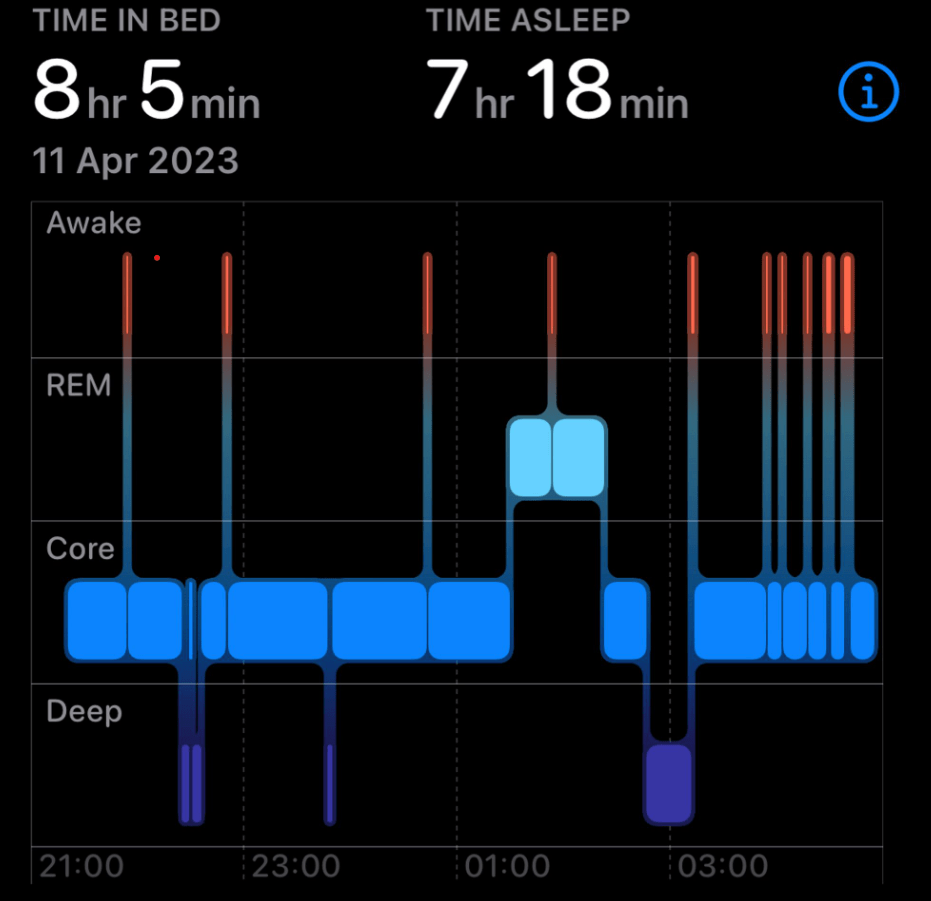
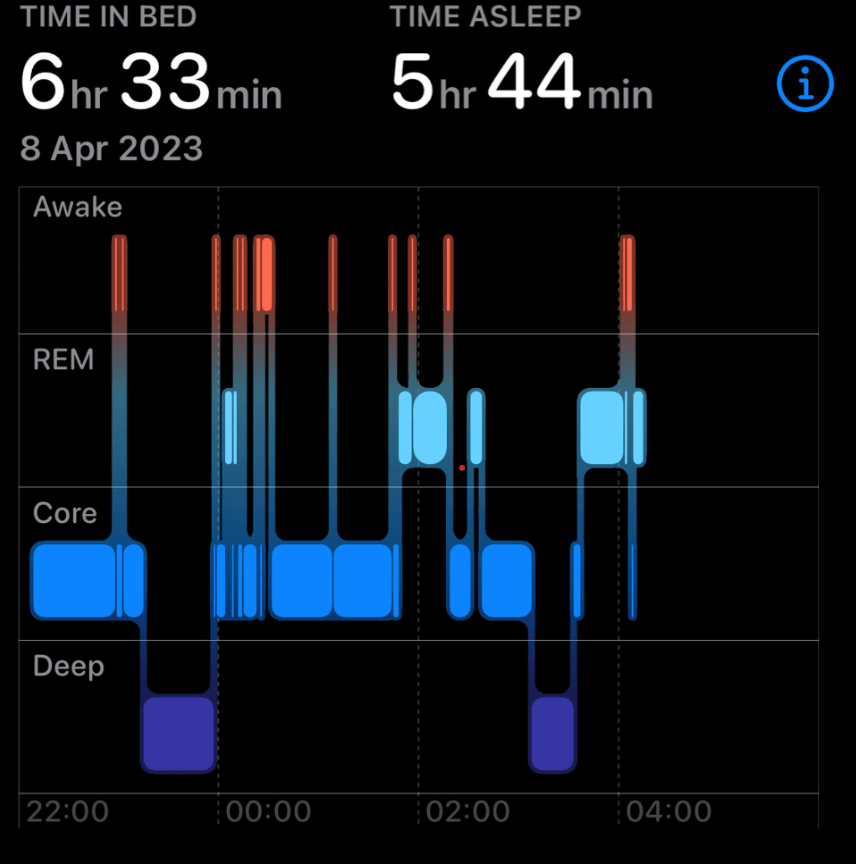
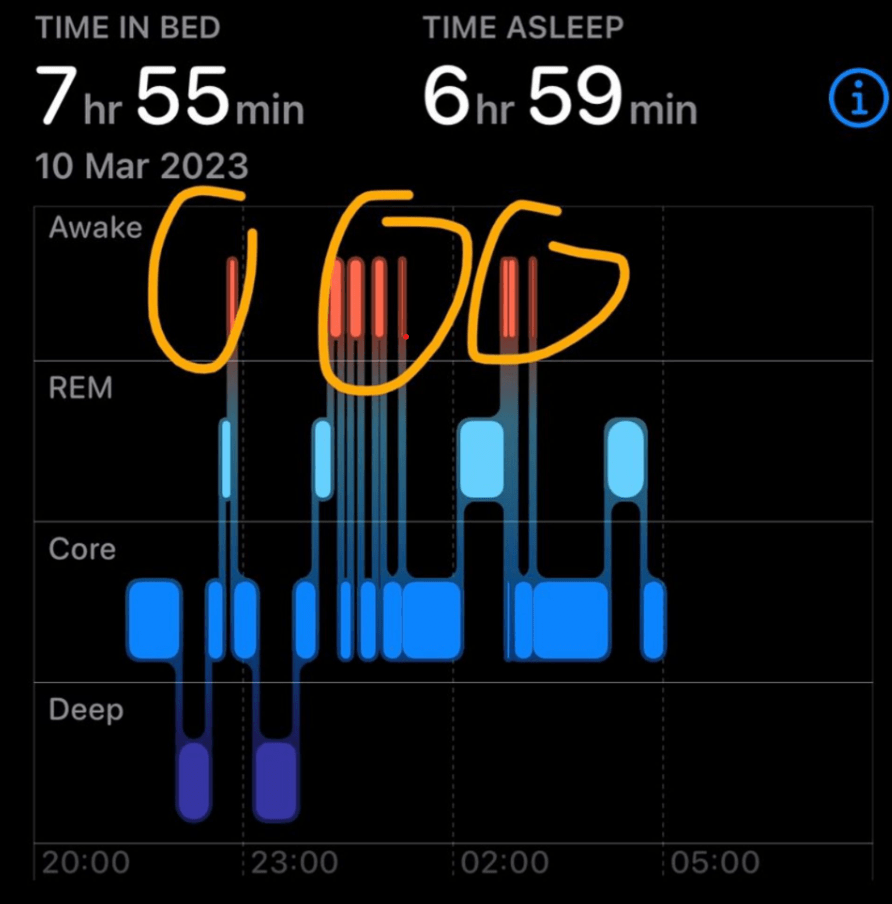
I am aware that having a better sleep is obviously going to make me sleep better, but my watch allows me to see the time I am asleep, something I could not measure just by recording when I go to sleep and when I wake up. The first image is of a good night’s sleep (<9pm – ~4am), the middle being bad sleep, although having a large amount of deep sleep, and the last being sleep with intermittent interruptions from the flat above mine who were using a drill (I also wonder why) at 3 different points during the night.
It must be noted that I have some skepticism around it’s accuracy of sleep stages. Sleep stages are characterized by brain waves, and are most accurately measured using a PSG (polysomnogram), however, Apple has yet to innovate to include head electrodes with their watches. Therefore, the watch extrapolates from heart rate data, which has been shown to be fairly accurate at measuring (1).
However, extrapolation is often inaccurate and can be misguided, so many question the accuracy of the sleep tracking in their watches. Apple being Apple does not make their extrapolations open-source so studies have to use the data measured by their Apple watch and extrapolate themselves to estimate the accuracy. A study in 2019 by Walch et al did this and found that extrapolations from heart rate and other data could be done to a good degree of accuracy (2). The one thing which it could not do well is ‘wake epochs’, which I did notice: I do not awaken as much as my watch reports.
Acoustic Headbands and Improving sleep
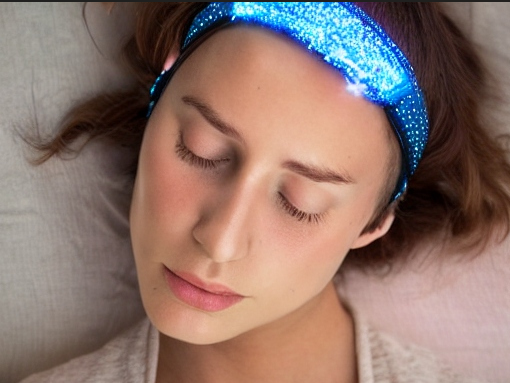
This image was generated by Generative AI (Deep AI) using the phrase ‘high-tech headband whilst sleeping’
There is tech, like my Apple Watch, which can track sleep to a degree of accuracy. However, what about IMPROVING sleep? This has been a topic in sleep medicine and psychology for a while.
A new study published in the American Psychology Association reports that ‘closed loop acoustic stimulation’, essentially specific sounds coming out of a headband, can improve sleep AND behavior and productivity at work (3).
Essentially, the study has various hypotheses, all of which can be summarised by playing specific sounds to engage deeper stages of sleep for the wearer and this increasing productivity. Skeptical at first, it was interesting to find such a high study-rich background section with a lot of studies, over the past few decades, on using this sort of method. The science of sleep is well studied, biologists have shown a close link to light cycles and there are differential sleep between animals, even if they are somewhat related. (Some birds can sleep with half their brain whilst flying!) Sound also does impact sleep, obviously, as anyone who has had noisy neighbors would know, so perhaps there is some merit to this method. The study found that, by using this acoustic stimulation, wearers had deeper non-REM sleep, increased engagement at work, and better behavior at work.
This was measured by self-reporting sleep and the other variables set out, something I am not fond of due to the limited quantifiability of the data. The measurement of sleep surprised me, participants were asked questions about sleeping rather than being lent a sleeping mat or another sleep-recording device. Thus, I still remain skeptical about the use of these headband devices. There is data showing that these sorts of acoustic sounds can improve sleep, with studies using quantitative sleep data, as listed in their background section. However, the extent to HOW it impacts your working day remains questionable to me.
Therefore, more study on these devices, on their practicality and efficacy in improving productivity, needs to be done. It is almost common sense that improving sleep improves cognition and productivity, but the question remains HOW much would such a device do?
As mentioned in their limitations, ethical questions also remain. Do you want your boss to give you headbands to wear at night to improve productivity? Personally, if they were shown to work and significantly improve productivity I’d invest, but right now I do not think the science is there yet.
Blue light – a free way to improve sleep
Before investing in these new technologies to improve sleep, you can do it for free! Published in the Sleep Medicine journal, Ishizawa et al showed that sleep can be improved by decreasing the amount of ‘pre-bedtime’ blue light exposure. ie – stop looking at screens before bedtime. Personally, I do not look at screens or any light source for an hour before bed. Using red LEDs or low light and reading from a non-bright Kindle or a real book or even listening to an audiobook could be a much better routine before closing your eyes.
I think it is interesting to look at my sleep data and try different tech, but I would not say it has been a huge leap, although this is anecdotal from me. I would have to wait for more study to come out before using any of these headbands if they come to market.
 William Chipperfield
Leave a comment